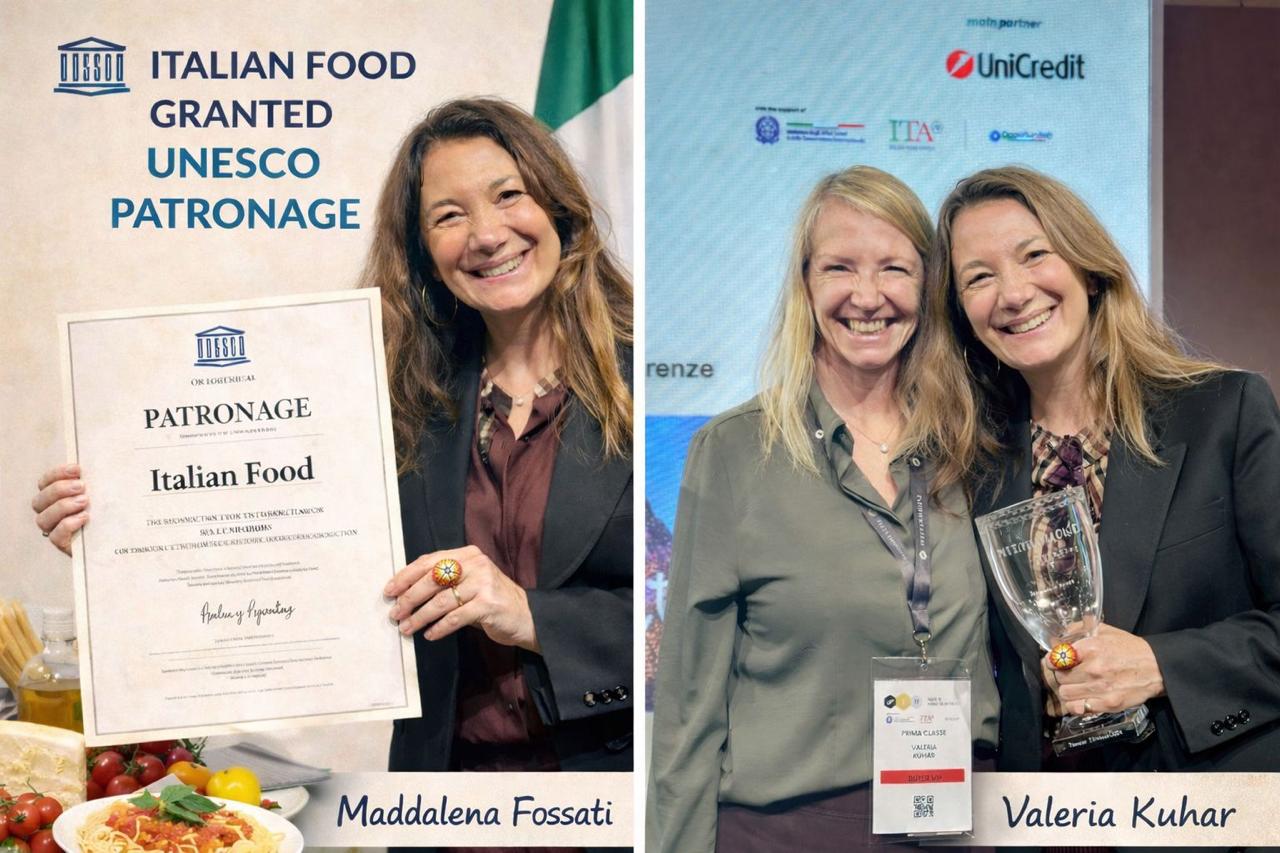
During the Pitti Taste exhibition in Florence (7–9 February 2026), I had the pleasure of meeting Maddalena Fossati, director of La Cucina Italiana and one of the voices behind the initiative that brought Italian cuisine into the international spotlight through its recognition within the UNESCO Intangible Cultural Heritage framework.
Pitti Taste is widely regarded as one of Italy’s most refined exhibitions dedicated to gastronomic excellence. Each year it gathers producers, international buyers and food professionals to explore the richness and craftsmanship of Italian gastronomy.
Meeting Maddalena Fossati offered an opportunity to reflect on the deeper cultural significance of Italian cuisine.
Italian Cuisine as Cultural Heritage
The initiative to recognise Italian cuisine within the UNESCO framework is based on a simple idea: Italian cuisine is far more than a collection of recipes. It is a living cultural system shaped by regional traditions, agricultural heritage and knowledge passed down through generations. Through the work of Maddalena Fossati and a wide network of chefs, academics and institutions, the candidacy highlighted Italian cuisine as a shared social practice that connects people while preserving cultural identity.
Today, this recognition confirms what millions already experience around the world: Italian cuisine is one of Italy’s most influential cultural expressions. For companies operating in global food markets, this recognition carries meaning beyond symbolism. Italian food travels internationally not only as a product, but as an expression of authenticity, craftsmanship and cultural heritage.
This perspective resonates strongly with the work carried out by Prima Classe, which for more than two decades has supported Italian producers approaching international markets, particularly across the United Arab Emirates and the wider Gulf region.
A Heritage Shared With the World
Encounters such as this remind us that the global success of Italian gastronomy is built not only on product quality, but also on the ability to communicate its cultural significance.
Italian cuisine is not simply food. It is culture, identity and tradition — shared with the world.